
Natural Ways to Improve Digestion After Every Meal
Good digestive health is key to feeling your best. Poor digestion can cause discomfort and bloating. Luckily, there are many effective methods to boost your digestive health naturally.
Natural Ways to Improve Digestion After Every Meal
Knowing how vital digestive health is is the first step to a healthier life. Making small changes in your daily routine and diet can greatly alleviate digestive discomfort. This article will share natural ways to improve digestion after meals. You’ll get useful tips and insights to help you.
Key Takeaways
- Understanding the importance of digestive health
- Simple dietary changes to enhance digestion
- Natural methods to alleviate digestive discomfort
- Practical tips for better digestive health
- Insights into maintaining a healthy digestive system
Understanding Digestive Health and Its Importance
Digestive health is key to our overall wellness. Knowing its importance can help us live healthier. The digestive system breaks down food, absorbs nutrients, and gets rid of waste.
How the Digestive System Works
The digestive system is complex, involving many organs. It starts in the mouth, where food is chewed and mixed with saliva. This saliva has enzymes to start breaking down carbs.
Then, the food goes down the esophagus into the stomach. Here, it meets stomach acid and enzymes that break down proteins and fats.

digestive system
Common Digestive Issues After Meals
Many people face digestive problems after eating, like bloating and discomfort. These can happen if we eat too fast, don’t chew well, or eat hard-to-digest foods.
The Connection Between Gut Health and Overall Wellness
Gut health is tied to our overall wellness. A healthy gut is vital for a strong immune system. Research shows that an imbalance in gut bacteria can cause health problems, including digestive issues and mental health concerns.
Keeping our digestive health in check is essential for well-being. By understanding our digestive system and supporting gut health, we can boost our health and lower the risk of digestive problems.
Mindful Eating Practices for Better Digestion
Mindful eating can make your digestion better. It means paying close attention to how you eat and drink. This includes both the physical and emotional sides of eating.
Chewing Food Thoroughly and Its Benefits
Chewing your food well is key to mindful eating. It breaks down food into smaller bits. This makes it easier for your body to digest.
It also helps you absorb nutrients better. And it can make indigestion symptoms go away.
Eating Without Distractions
Eating without distractions is important. Turn off the TV and put away your phone. This lets you focus on your food and the act of eating.
It can help you relax and improve digestion.
Portion Control Strategies
Controlling your portions is vital for good digestion. There are two main ways to do this.
Using Smaller Plates
Using smaller plates helps control how much you eat. It makes your plate look full, even if you’re eating less. This way, you can eat less without feeling like you’re missing out.
Listening to Hunger Cues
Listening to your body’s hunger signals is another way. Pay attention to when you’re hungry and when you’re full. This helps you avoid eating too much and builds a healthier relationship with food.
Adding these mindful eating habits to your daily life can greatly improve your digestion. Being more aware of your eating can help you take charge of your digestive health.
Dietary Habits That Support Digestive Health
What we eat greatly affects our digestive system. Making smart food choices can boost our digestive health.
Meal Timing and Frequency
Eating at the same time each day helps our digestive system work better. Spacing out meals lets our body absorb nutrients more efficiently.
Food Combinations That Promote Digestion
Choosing the right foods together can help digestion. For instance, eating protein-rich foods with veggies can improve nutrient use. Also, avoid mixing high-starch foods with proteins or acidic foods to lessen discomfort.
Hydration Tips for Optimal Digestion
Drinking enough water is key to digestion. Drinking enough water helps break down nutrients and fiber, making them easier for our bodies to use.
Water Temperature Considerations
It’s best to drink water at room temperature. This is gentler on our digestive system than cold water.
Timing Your Water Intake
Drinking water between meals is better. It helps avoid diluting digestive enzymes during meals.
| Hydration Timing | Benefits |
| Before Meals | Helps with satiety and digestion preparation |
| Between Meals | Aids in nutrient absorption and prevents dehydration |
| After Meals | Assists in digestion and prevents constipation |
Natural Ways to Improve Digestion After Every Meal
Natural methods can greatly help digestion after eating. They make you feel better overall. Simple habits can ease stomach pain and keep your gut healthy.
Post-Meal Walking Benefits
Walking a bit after meals can boost digestion. It helps avoid bloating and indigestion. Post-meal walking moves food through your system better, helping you absorb nutrients.
Proper Posture After Eating
Keeping the right posture after eating is key. Don’t slouch or lie down right after eating. It can slow down digestion and put pressure on your stomach.
Breathing Techniques for Digestive Support
Breathing techniques can ease stress and boost digestion. Deep belly breathing, for example, can get your digestive system going and improve gut health.
Gentle Abdominal Massage Methods
Lightly massaging your belly can help digestion and ease discomfort. Use circular motions to help food move through your system.
Adding these natural steps to your day can really help your digestion and overall health.
- Take a short walk after meals to stimulate digestion.
- Maintain proper posture to avoid putting pressure on the stomach.
- Practice breathing techniques to reduce stress and promote gut health.
- Use gentle abdominal massage to aid digestion.
Digestive-Friendly Foods to Include in Your Diet
Certain foods are key to a healthy digestive system. They help improve digestion after meals. Adding these foods to your diet can ease common digestive problems and boost gut health.
Fiber-Rich Foods for Gut Health
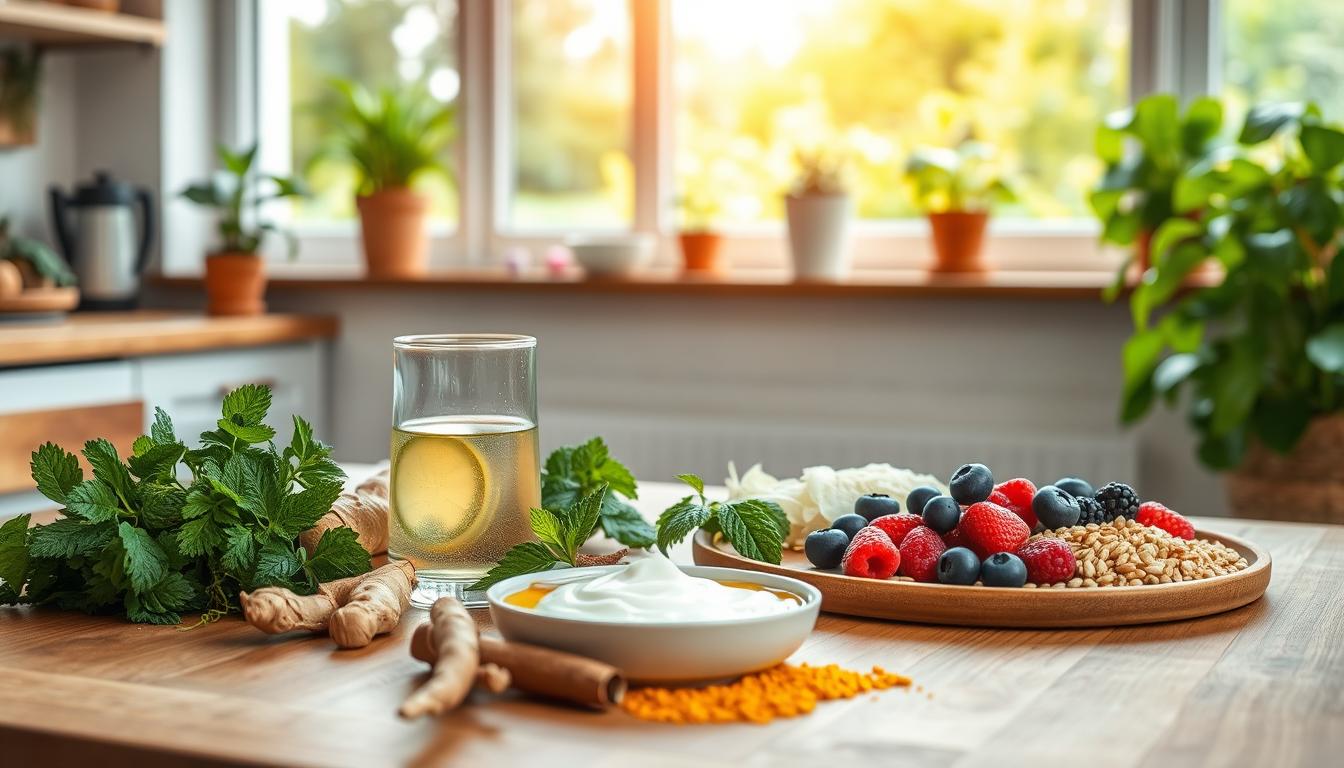
Fiber-rich foods are vital for regular bowel movements and avoiding constipation. Foods high in fiber include fruits like berries and bananas, and veggies like broccoli and carrots. Whole grains like oats and barley are also good. These foods make stool bulkier and support good gut bacteria.
Probiotic and Prebiotic Foods
Probiotic foods have live bacteria that help the gut. Examples are yogurt, kefir, and fermented veggies like sauerkraut. Prebiotic foods, like asparagus, garlic, and onions, feed these beneficial bacteria. This supports a healthy gut microbiome.
Anti-Inflammatory Foods for Digestion
Some foods have anti-inflammatory properties that soothe the digestive tract. Omega-3 fatty acid-rich fatty fish, like salmon, are good. So are foods high in antioxidants, like turmeric and ginger.
Foods to Limit or Avoid
It’s important to limit or avoid foods that can upset digestion. High-fat, spicy, and sugary foods are examples. Being mindful of your diet helps support your digestive health and overall well-being.
Herbal Remedies and Teas for Digestive Support
Looking for natural ways to improve digestion? Herbal remedies and teas are great options. They can make mealtime more comfortable by soothing and boosting digestive health.
Ginger and Peppermint Benefits
Ginger and peppermint are top choices for digestive issues. Ginger fights inflammation and eases nausea, improving digestion. Peppermint helps IBS by relaxing digestive muscles.
Digestive Bitters and Their Effects
Digestive bitters boost digestion by making more digestive enzymes. They mix bitter herbs like gentian, angelica, and chamomile. Benefits include better digestion, less bloating, and better nutrient absorption.
Herbal Tea Recipes for After Meals
Herbal teas are great for digestion after meals. Here are a couple of recipes:
Chamomile and Fennel Blend
This tea combines chamomile’s calmness with fennel’s digestive benefits. Steep 1 teaspoon of dried chamomile and 1 teaspoon of fennel seeds in boiling water for 5-7 minutes.
Licorice Root Infusion
Licorice root soothes the digestive tract and reduces inflammation. Steep 1 tablespoon of dried licorice root in boiling water for 10 minutes. Strain and enjoy after meals.
| Herbal Remedy | Benefits | Preparation |
| Ginger | Reduces nausea, improves digestion | Tea or added to meals |
| Peppermint | Eases IBS symptoms, relaxes digestive muscles | Tea or capsules |
| Chamomile and Fennel | Anti-inflammatory, aids digestion | Steep in boiling water |
| Licorice Root | Soothes digestive tract, reduces inflammation | Infusion |
Lifestyle Changes to Prevent Digestive Discomfort
Making lifestyle changes can greatly help your digestion. Simple daily habits can improve your digestive health a lot.
Stress Management Techniques
Stress can really hurt your digestion, causing discomfort. Using stress management like meditation or yoga can help. Also, regular exercise and enough sleep lower stress.
Sleep Quality and Digestion Connection
Good sleep is key to digestion. Bad sleep can mess up your gut bacteria, causing problems. A regular sleep schedule and a cozy sleep area can help your digestion.
Exercise Routines That Support Gut Health
Exercise is good for your digestion. It helps move your bowels and keeps your gut healthy. Walking, jogging, or cycling are great. Choose something you like to do regularly.
When to Seek Professional Help
If you have ongoing or bad digestive issues, see a doctor. They can find the cause and suggest treatments. Early action can stop bigger problems and help your digestion.
| Lifestyle Change | Benefit to Digestion |
| Stress Management | Reduces digestive discomfort caused by stress |
| Improved Sleep Quality | Supports balance of gut bacteria |
| Regular Exercise | Stimulates bowel movements and improves gut motility |
By making these lifestyle changes, you can lower the chance of digestive issues. This helps your overall health and well-being.
Conclusion: Creating Your Personalized Digestive Wellness Plan
Start by making your meals more mindful. Chew your food well and eat without distractions. This helps your digestion a lot.
Creating a digestive wellness plan is key. It should include good eating habits and staying hydrated. Also, add foods that are good for your digestion, like fiber and probiotics.
Try natural ways to help your digestion after meals. Walking, good posture, and a gentle belly massage can help. These steps make your digestive health plan complete.
Being proactive about your digestive health can greatly improve your life. Make your own digestive wellness plan today. Enjoy a healthier digestive system and better overall wellness.
FAQ
What are some natural ways to improve digestion after every meal?
To improve digestion, try taking a short walk or doing a gentle abdominal massage. Breathing techniques can also help. Eating foods high in fiber and probiotics is good for your gut.
How can mindful eating practices improve digestion?
Mindful eating helps digestion by reducing stress. Chew your food well and eat without distractions. Also, eating the right amount helps your body process food better.
What dietary habits can support digestive health?
For better digestion, eat at regular times and mix foods wisely. Drinking water at the right temperature and time is also key.
Are there any herbal remedies that can aid digestion?
Yes, ginger, peppermint, and digestive bitters can help. Herbal teas like chamomile and fennel blend are good after meals. Licorice root infusion is also beneficial.
How can lifestyle changes prevent digestive discomfort?
To avoid digestive issues, manage stress, and get enough sleep. Exercise that’s good for your gut is important. Knowing when to see a doctor is also key.
What foods should be included in a diet to support digestive health?
Include foods high in fiber, probiotics, and anti-inflammatory foods. Avoid foods that can upset your stomach.
Can proper posture after eating improve digestion?
Yes, good posture after eating helps digestion. It reduces stomach pressure and aids digestion.
How does hydration impact digestion?
Water is vital for digestion. It helps dissolve nutrients and fiber. The right temperature and timing of water intake matter too.