

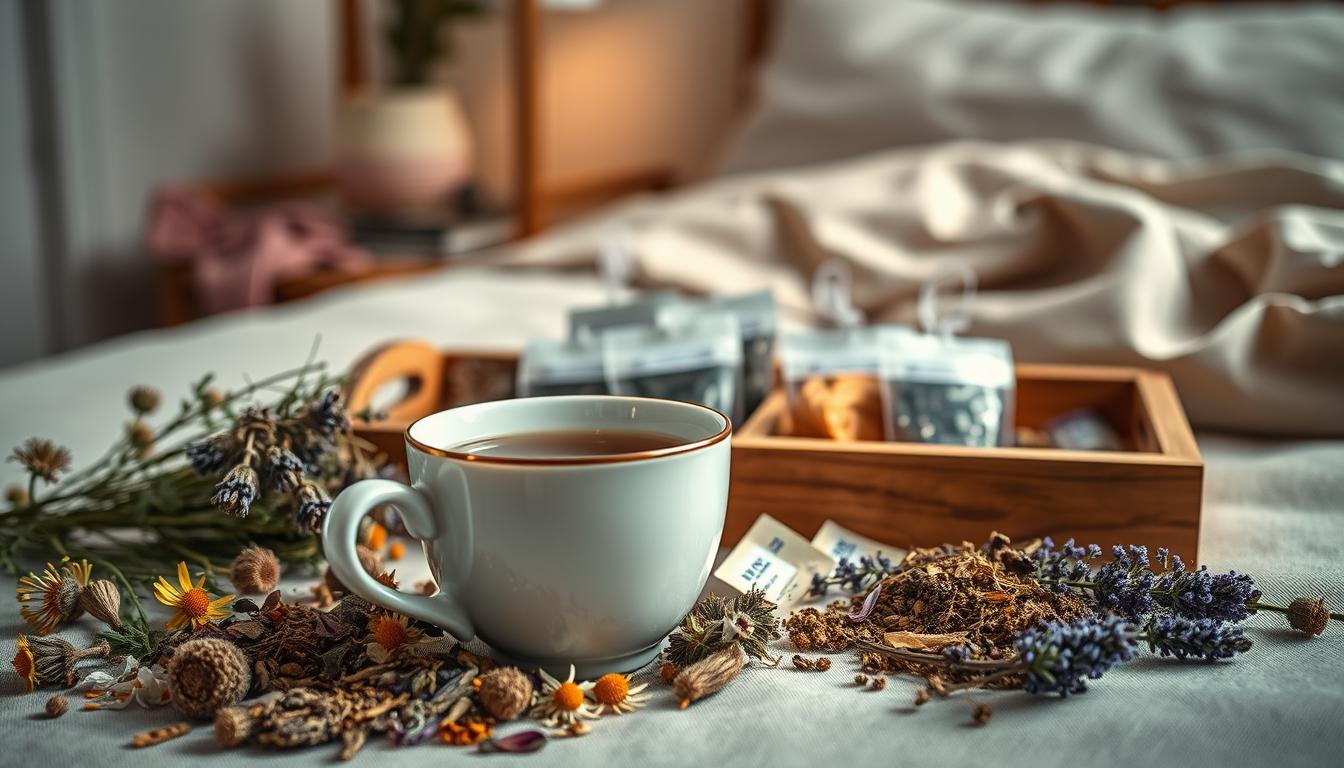
DIY Herbal Teas for Better Sleep and Relaxation
In today’s fast world, getting better sleep and relaxation is key to health. A natural way to help is by drinking herbal teas every day.
DIY Herbal Teas for Better Sleep and Relaxation
Herbal teas have been calming minds and bodies for centuries. They prepare you for a good night’s sleep. By trying DIY herbal teas, you can find many flavors that help you relax and sleep better.
Key Takeaways
- Herbal teas can promote relaxation and improve sleep quality.
- Certain herbs have natural calming effects.
- DIY herbal teas offer a customizable and cost-effective solution.
- Herbal teas can be a healthy alternative to traditional sleep aids.
- Experimenting with different blends can help you find the perfect tea for better sleep.
The Science Behind Herbal Teas and Sleep
Herbal teas and sleep have a deep connection. This is because certain herbs affect our nervous system. They help with insomnia and restlessness thanks to their bioactive compounds.
How Herbs Affect Your Nervous System
Teas like chamomile and valerian root have compounds that relax us. These compounds interact with our brain, helping us sleep better and feel less anxious.

herbal teas and sleep science
The Connection Between Relaxation and Quality Sleep
Relaxation is key to good sleep. Herbal teas help us relax by lowering stress hormones. This leads to better sleep quality.
Benefits Beyond Sleep: Stress Reduction and Mood Enhancement
Herbal teas do more than help us sleep. They also reduce stress and boost our mood. Herbs like lavender and lemon balm are great for feeling better and less stressed.
| Herb | Primary Benefit | Secondary Benefit |
| Chamomile | Promotes Relaxation | Improves Sleep Quality |
| Lavender | Reduces Anxiety | Enhances Mood |
| Valerian Root | Improves Sleep | Reduces Stress |
Essential Herbs for DIY Herbal Teas for Better Sleep and Relaxation
Herbs are key in making DIY herbal teas for better sleep and relaxation. They come in many types, each with special properties. These properties help promote a good night’s sleep and lower stress.
Creating the perfect herbal tea starts with knowing the different herbs and their effects. Herbs can be calming, sleep-inducing, or stress-reducing. Each type has its own role in helping you relax and sleep better.
Calming Herbs: Chamomile, Lavender, and Lemon Balm
Calming herbs soothe the mind and body. Chamomile has a gentle smell like apples and calms the nervous system. Lavender is famous for its calming effects in teas. Lemon balm adds a citrusy taste and calms the body.
Sleep-Inducing Herbs: Valerian Root, Passionflower, and Hops
Some herbs help you sleep better. Valerian root is great for sleep quality. Passionflower has been used for anxiety and insomnia. Hops are known for their sedative effects, even though they’re in beer.
Stress-Reducing Herbs: Holy Basil, Ashwagandha, and Linden
Stress can make it hard to sleep. Certain herbs help reduce stress. Holy basil is known for its stress-fighting properties. Ashwagandha lowers cortisol levels, which helps reduce stress. Linden flowers make a calming tea.
| Herb | Primary Use | Benefits |
| Chamomile | Calming | Soothes the nervous system, promotes relaxation |
| Valerian Root | Sleep-Inducing | Improves sleep quality, reduces insomnia |
| Holy Basil | Stress-Reducing | Adaptogenic properties reduce cortisol levels |
Sourcing Quality Herbs: Fresh, Dried, or Store-Bought
The quality of herbs in your tea matters a lot. You can get herbs fresh, dried, or from stores. Fresh herbs taste and smell great, but dried ones last longer. Store-bought herbs are easy, but choose good suppliers for quality.
When picking herbs, think about how they were grown, processed, and stored. This ensures you get the best herbs for your teas.
5 Effective DIY Herbal Tea Recipes for Nighttime
Nighttime is the perfect moment for a warm, comforting herbal tea. It’s tailored to help you relax and sleep well. We’ll explore DIY herbal tea recipes you can make at home.
Dreamy Chamomile and Lavender Blend
This blend combines chamomile and lavender for a restful night’s sleep.
Ingredients and Preparation
Mix 1 tablespoon of dried chamomile flowers with 1 tablespoon of dried lavender buds. Steep in boiling water for 5-7 minutes, then strain and enjoy.
Benefits for Sleep Quality
The mix of chamomile and lavender can improve sleep quality. It reduces anxiety and stress, helping you fall and stay asleep.
Deep Sleep Valerian and Passionflower Tea
This blend helps you fall asleep faster and sleep soundly.
Ingredients and Preparation
Combine 1 tablespoon of dried valerian root with 1 tablespoon of dried passionflower. Steep in boiling water for 7-10 minutes, then strain.
Benefits of Sleep Onset
Valerian root helps you fall asleep quickly. Passionflower reduces anxiety, making it easier to sleep.
Calming Lemon Balm and Mint Infusion
This infusion is great for those who struggle with anxiety before bed.
Ingredients and Preparation
Mix 1 tablespoon of dried lemon balm with 1 tablespoon of dried mint leaves. Steep in boiling water for 5 minutes, then strain.
Benefits for Anxiety Reduction
The mix of lemon balm and mint reduces anxiety. It promotes calmness, making it easier to relax before bed.
Stress-Relief Holy Basil and Rose Tea
This tea helps manage stress and promotes relaxation.
Ingredients and Preparation
Combine 1 tablespoon of dried holy basil with 1 tablespoon of dried rose petals. Steep in boiling water for 5-7 minutes, then strain.
Benefits of Stress Management
Holy basil helps manage stress. Rose petals add a calming effect.
Soothing Bedtime Blend with Multiple Herbs
This blend combines herbs for overall relaxation and better sleep.
Ingredients and Preparation
Mix equal parts of dried chamomile, lavender, valerian root, and lemon balm. Steep 2 tablespoons of this blend in boiling water for 7-10 minutes, then strain.
Benefits for Overall Relaxation
This blend offers a mix of relaxation benefits. It promotes a restful night’s sleep.
To show the benefits of these herbal teas, here’s a comparison table:
| Herbal Tea | Primary Benefit | Key Ingredients |
| Dreamy Chamomile and Lavender Blend | Improves sleep quality | Chamomile, Lavender |
| Deep Sleep Valerian and Passionflower Tea | Promotes deep sleep | Valerian Root, Passionflower |
| Calming Lemon Balm and Mint Infusion | Reduces anxiety | Lemon Balm, Mint |
| Stress-Relief Holy Basil and Rose Tea | Manages stress | Holy Basil, Rose |
| Soothing Bedtime Blend | Promotes overall relaxation | Chamomile, Lavender, Valerian Root, Lemon Balm |
Best Practices for Preparing and Enjoying Sleep-Promoting Teas
Making herbal teas right can boost their sleep benefits. It’s key to prepare and drink them the right way.
Proper Brewing Techniques for Maximum Benefits
Getting herbal teas just right is important. They should steep for 5 to 7 minutes. But some, like valerian root, might need more time.
Timing and Dosage Recommendations
When and how much you drink herbal tea matters. Drink it 30 to 60 minutes before bed. Aim for 1 to 2 cups a day.
| Herb | Recommended Dosage | Steeping Time |
| Chamomile | 1 cup | 5-7 minutes |
| Valerian Root | 1-2 cups | 7-10 minutes |
| Lavender | 1 cup | 5-7 minutes |
Creating a Relaxing Bedtime Ritual with Herbal Teas
Adding herbal tea to your bedtime routine can relax you. Try reading, meditating, or taking a warm bath. The goal is to make your space calm and signal sleep time.
Precautions and Possible Side Effects
Herbal teas are mostly safe, but be careful. Some can mix badly with meds or affect people differently. For instance, valerian root might make some dizzy.
Conclusion
DIY herbal teas are a great way to improve sleep and relaxation. Using herbs like chamomile, lavender, and valerian root can help you sleep better. You’ll wake up feeling refreshed and ready for the day.
These teas do more than just help you sleep. They also reduce stress and boost your overall well-being. By making your own herbal teas, you can manage stress and find more relaxation in your life.
When trying herbal teas, make sure to use high-quality herbs. Also, follow the right brewing methods to get the most benefits. With a bit of creativity, you can make a tea that’s just right for you. It will help you sleep and relax better.
FAQ
What are the best herbs for promoting sleep and relaxation?
Herbs like chamomile, lavender, valerian root, and passionflower are great for calming and helping you sleep. They’re perfect for making your own herbal teas.
How do I source high-quality herbs for my DIY herbal teas?
Look for high-quality herbs by buying from trusted suppliers. Choose organic and sustainably grown options. Also, check for freshness and potency.
Can I mix different herbs together in one tea blend?
Yes, you can mix herbs to make unique blends. This can help with sleep or stress relief, depending on your needs.
What is the recommended dosage for herbal teas before bedtime?
Dosage varies by herb and individual. But start with 1-2 cups 30-60 minutes before bed.
Are there any potential side effects or interactions with medications when consuming herbal teas?
Herbal teas are usually safe, but some can interact with meds or cause side effects. Always check with a healthcare professional if you’re worried.
How do I properly brew herbal teas to maximize their benefits?
To brew well, use the right water temperature and steep time. Use the right amount of herbs for the best extraction of their active compounds.
Can I use herbal teas in conjunction with other sleep-promoting practices?
Yes, using herbal teas with other sleep habits can boost their effect. This includes a consistent sleep schedule and a relaxing sleep environment.